
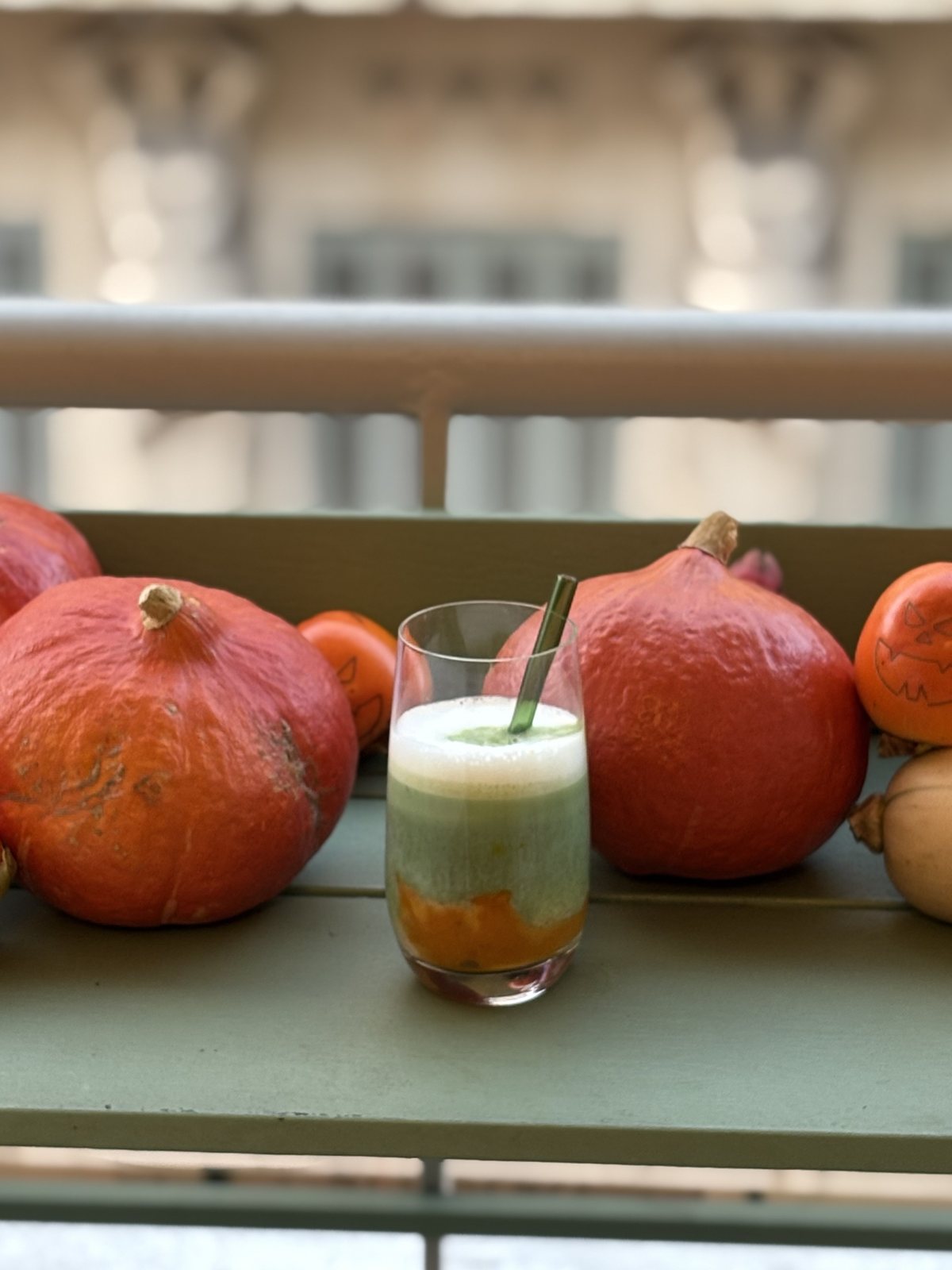
Matcha and red kuri squash, an autumn pairing
By Léa Chardonneret · October 2026 · 6 min read
The days are getting shorter, even in Cannes. The sun sets earlier over the bay, the evenings turn cooler and we reach for a warm drink. It is red kuri squash season, and Halloween. To welcome it, we have brought together two flavours from Japan: matcha and red kuri squash.
Halloween, the festival of the turn towards winter
Behind the pumpkins and costumes, Halloween keeps the memory of a very old turning point. Its name comes from All Hallows’ Eve, “the eve of all saints”: the night of 31 October, before All Saints’ Day, set on 1 November in the 9th century.
Its roots are thought to go back to Samhain, a festival of the Celtic world that marked the end of summer and the start of the cold season. It was lived as a threshold between the year that was ending and the one beginning, a night when the world of the living and the world of spirits were believed to draw closer. The first lanterns were carved from turnips; pumpkins replaced them later, in North America.
At heart, Halloween celebrates what everyone feels at this time of year: the fading light, the wish to gather, and the pleasure of seasonal flavours.
And in Japan?
Our matcha comes from Japan, so we wanted to look at how this time of year is lived there. The great themes of Samhain are all there, remembering the dead and the end of the harvest, but they fall at different points in the calendar.
Obon, the summer of the ancestors
In Japan, the time when the dead return is not autumn but summer. During Obon, a Buddhist festival usually held from 13 to 16 August (from July in Tokyo), the spirits of ancestors are believed to come home. Families light a small fire to welcome them, dance the bon odori, then guide them back with lanterns, sometimes set afloat on a river. As at Samhain, a threshold opens between two worlds; but it is lived with family, around the memory of loved ones.
Tsukimi, autumn under the full moon
Japanese autumn, for its part, is celebrated by looking at the moon. Tsukimi (月見, “moon viewing”) takes place on the fifteenth night of the eighth lunar month, in September or early October depending on the year: the mid-autumn moon. The custom came from China and was first a pastime of the court, with music and poetry, before spreading across the country in the Edo period.
It is a way of giving thanks for the year’s harvest and hoping the next will be as good. Offerings are laid out: tsukimi dango, small rice dumplings as round as the full moon, stems of susuki, a tall grass whose plumes evoke ears of rice, and seasonal produce: taro, chestnuts… and squash.
And Halloween?
Halloween arrived in Japan very recently. In the 1990s, it was mostly celebrated among foreigners. Theme parks made it known: Tokyo Disneyland launched its Halloween event in 1997, followed by Universal Studios Japan in Osaka in the early 2000s. It took the form of a great costume festival, in a country where cosplay was already much loved: around 31 October, crowds fill the streets of Shibuya in Tokyo and Amerikamura in Osaka. Shops followed: by 2015, the Halloween market already exceeded 122 billion yen. Trick-or-treating, on the other hand, never really caught on, and Shibuya, overwhelmed by the crowds, ended up banning drinking in the streets around the station.
Why such success? Probably because Halloween does not take the place of any tradition there: remembering the dead belongs to Obon, giving thanks for the harvest to tsukimi. It remains a light-hearted festival, one of costumes and the start of autumn.
Red kuri squash, a Japanese cousin
Red kuri squash, known in France as potimarron, belongs to the species Cucurbita maxima. It was selected in Japan, especially on the island of Hokkaido, among the squashes called kuri kabocha there, literally “chestnut squash”. Its French name tells the same story: a little potiron (pumpkin), a little marron (chestnut), for its dense, sweet flesh with a chestnut-like taste.
It has another advantage in the kitchen: no need to peel it raw, which is often the hardest part with a squash. Just wash it, remove the seeds and roast it in pieces with the skin on: the flesh then comes away easily with a spoon.
In Japan, squash even has its own date: at tōji, the winter solstice, kabocha is traditionally eaten to bring good luck, a custom that took root in the middle of the Edo period. Because it keeps for a long time, it was one of the few vegetables still to hand in the depths of winter.
Why matcha and red kuri squash go together
- Taste: the round sweetness and chestnut notes of the squash wrap around the vegetal character of matcha and soften its bitterness.
- Spices: cinnamon, ginger and nutmeg link the two and give the glass its autumn warmth.
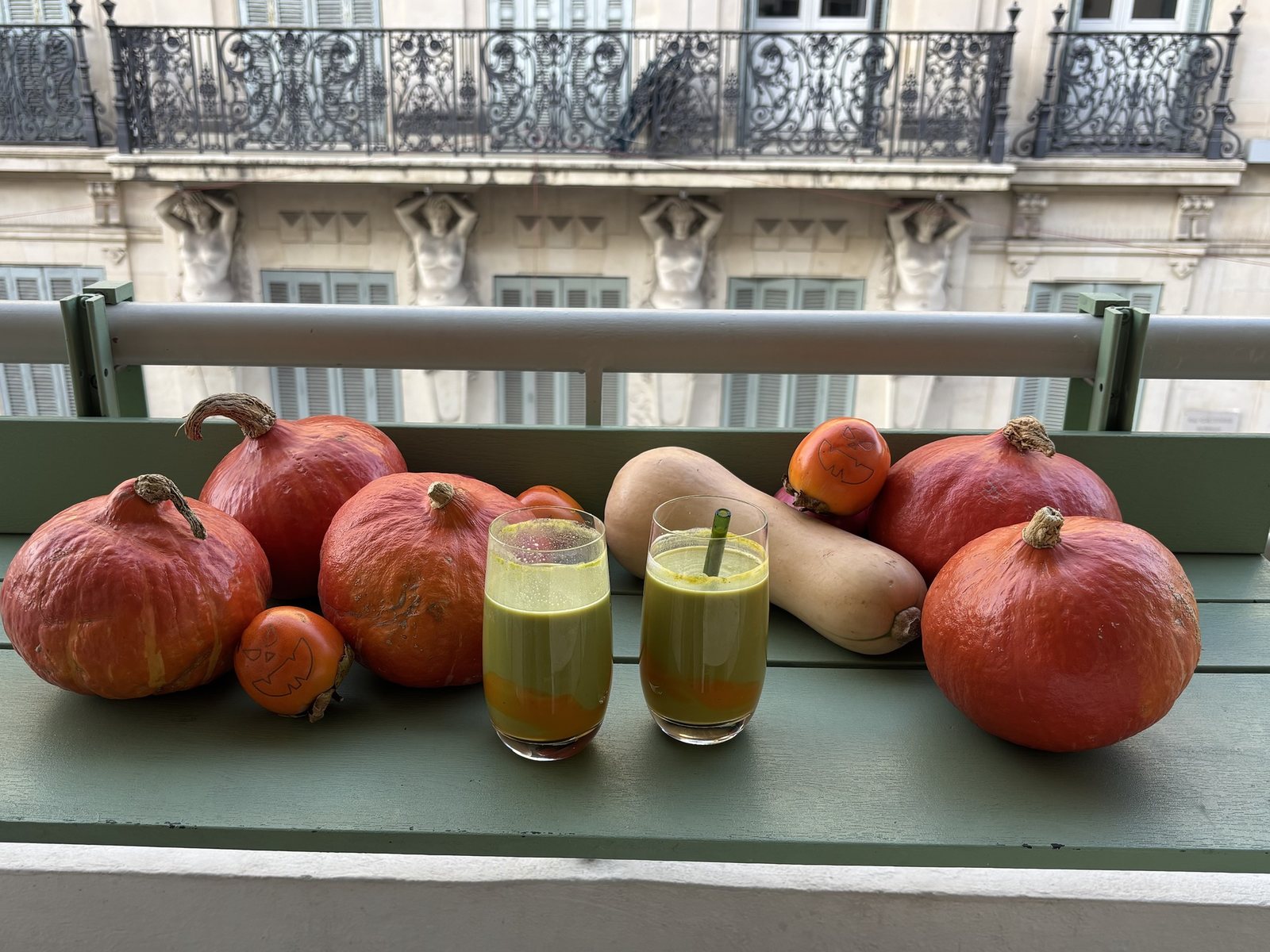
- Looks: the orange of the squash, the green of the matcha, the white of the milk foam. The glass takes on the colours of the season, and of Halloween.
Pumpkin matcha latte, step by step
A spiced squash purée, milk foam and matcha poured in last: every step in photos, hot or iced.
See the recipe →Shop the ingredient
Sources
- Hérodote.net, “Halloween” (in French: Samhain, the eve of All Saints’ Day, turnips and pumpkins), accessed 28 October 2026.
- Futura Sciences, “Halloween : qu’est-ce que c’est ?” (in French), accessed 28 October 2026.
- Techno-Science.net, “Potimarron” (in French: Cucurbita maxima, selected in Japan and Hokkaido, edible skin), accessed 28 October 2026.
- Nippon.com, “Tsukimi: The Japanese Tradition of Autumn Moon Viewing”, accessed 29 October 2026.
- GoGo Nihon, “What is Obon?”, accessed 29 October 2026.
- Global Voices, “A short history of Halloween in Japan” (October 2016), accessed 29 October 2026.
- Tokyo Weekender, “The Evolution of Halloween in Tokyo” (October 2024), accessed 29 October 2026.
- Intojapan Waraku, article on squash at the winter solstice (in Japanese), accessed 29 October 2026.