
How to make usucha, step by step
By Léa Chardonneret · October 2026 · 5 min read
Usucha is the simplest and most classic way to drink Japanese matcha: a bowl, a bamboo whisk and hot water. Here are the ratio, the temperature and the whisking technique, step by step. It is also how we taste, in Cannes, the Japanese matcha we select.
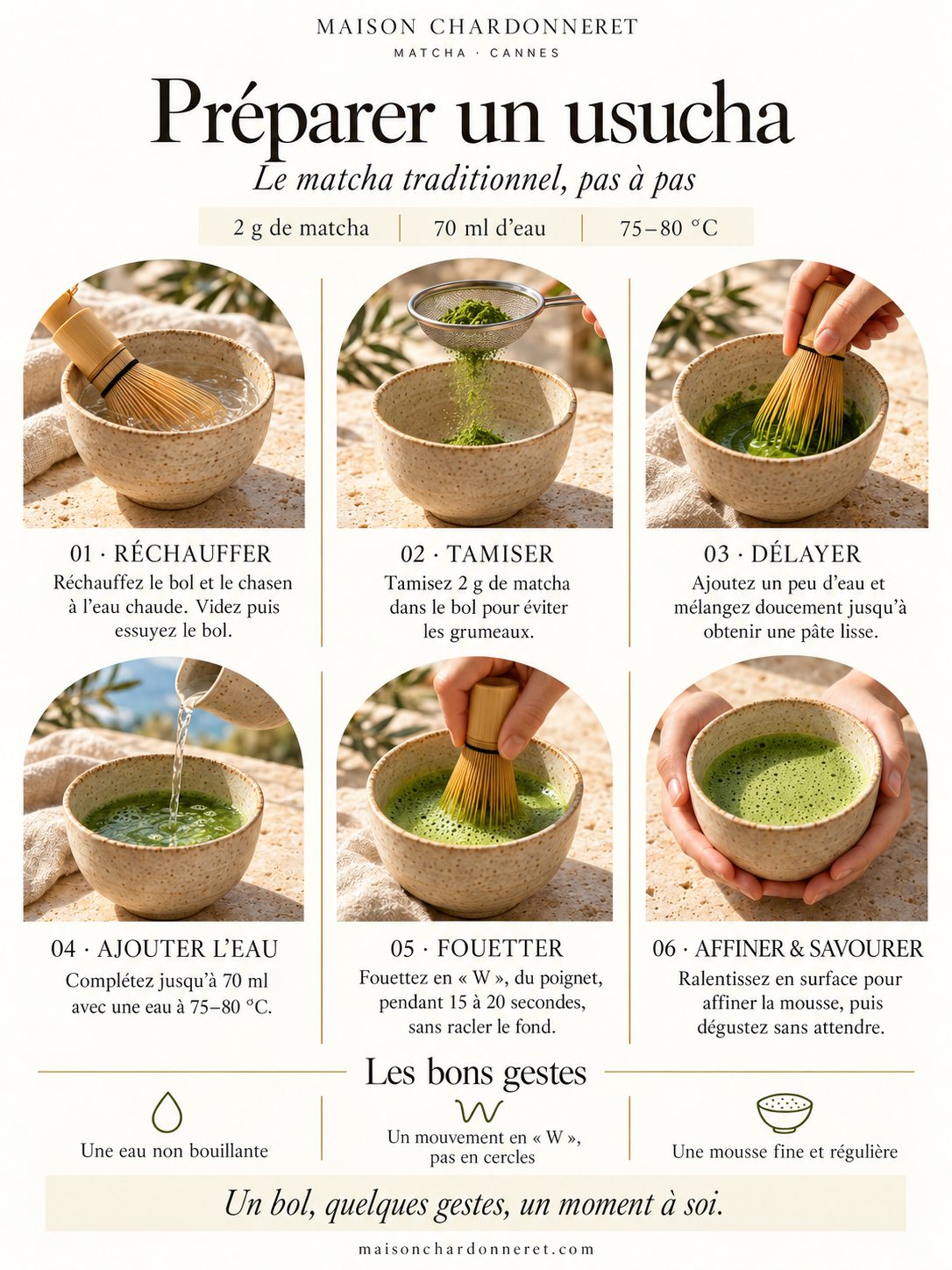
Usucha and koicha: two ways to drink matcha
In Japan, there are two preparations. Usucha (薄茶), literally “thin tea”, is matcha whisked into a fine foam. It is the one most often served, and the one we show you how to make here.
Koicha (濃茶), “thick tea”, uses much more powder for very little water: it is not whisked but gently kneaded, until it has the texture of a light cream. It calls for a matcha chosen for that purpose.
Equipment
- A bowl (chawan) wide enough to let the whisk move freely. A round-bottomed bowl will do.
- A bamboo whisk (chasen). Its dozens of fine prongs create usucha’s characteristic foam. A small electric whisk can help out, with a coarser foam.
- A bamboo scoop (chashaku), or a teaspoon.
- A small sieve or a fine tea strainer.
- A kettle, ideally with temperature control, or a kitchen thermometer.
The ratio
2 chashaku scoops or 1 level teaspoon
Without a temperature-controlled kettle, bring the water to the boil, then pour it into another container (a cup, a jug) to let it cool before using it. The Kyoto Prefectural Tea Research Institute recommends 70 to 80 °C, slightly lower in summer and slightly higher in winter.
Step by step
- Warm the bowl and the whisk. Pour a little hot water into the bowl, dip the prongs of the chasen in it for a moment, then empty the bowl and dry it.
- Sift the matcha. Push the 2 g of powder through the sieve straight into the bowl, using the scoop. Matcha clumps easily: sifting is the key to a smooth foam.
- Make a paste. Pour in a small splash of water first and gently mix with the whisk until smooth, with no lumps.
- Add the rest of the water, up to 70 ml.
- Whisk. Hold the whisk upright and move from the wrist, not the arm, drawing a quick “W” (or “M”) back and forth for about 15 to 20 seconds. The prongs should brush the bottom of the bowl without scraping it.
- Refine the foam. Slow down, bring the whisk up to the surface and pop the larger bubbles with the tips of the prongs. Finish by gently lifting the whisk out from the centre of the bowl.
- Enjoy straight away: the powder settles at the bottom if the bowl is left to stand.
Common mistakes
- Water that is too hot: boiling water brings out bitterness and masks the softer notes of the matcha.
- Lumps: most of the time, the powder was not sifted.
- A thick, coarse foam: the movement comes from the arm, in circles. Go back to the “W”, from the wrist.
- A taste that is too light: too much water for the amount of powder. Keep the 2 g to 70 ml ratio, then adjust to your taste.
Caring for your chasen
Rinse the whisk in clean water right after use, without soap, then let it air-dry, prongs facing down, ideally on a ceramic holder (kusenaoshi) that helps it keep its shape. Put it away once fully dry.
Storing your matcha
Matcha is sensitive to air, light, heat and moisture. Close the pouch tightly after each use, keep it dry and away from light, and use it within a few weeks of opening.
What next?
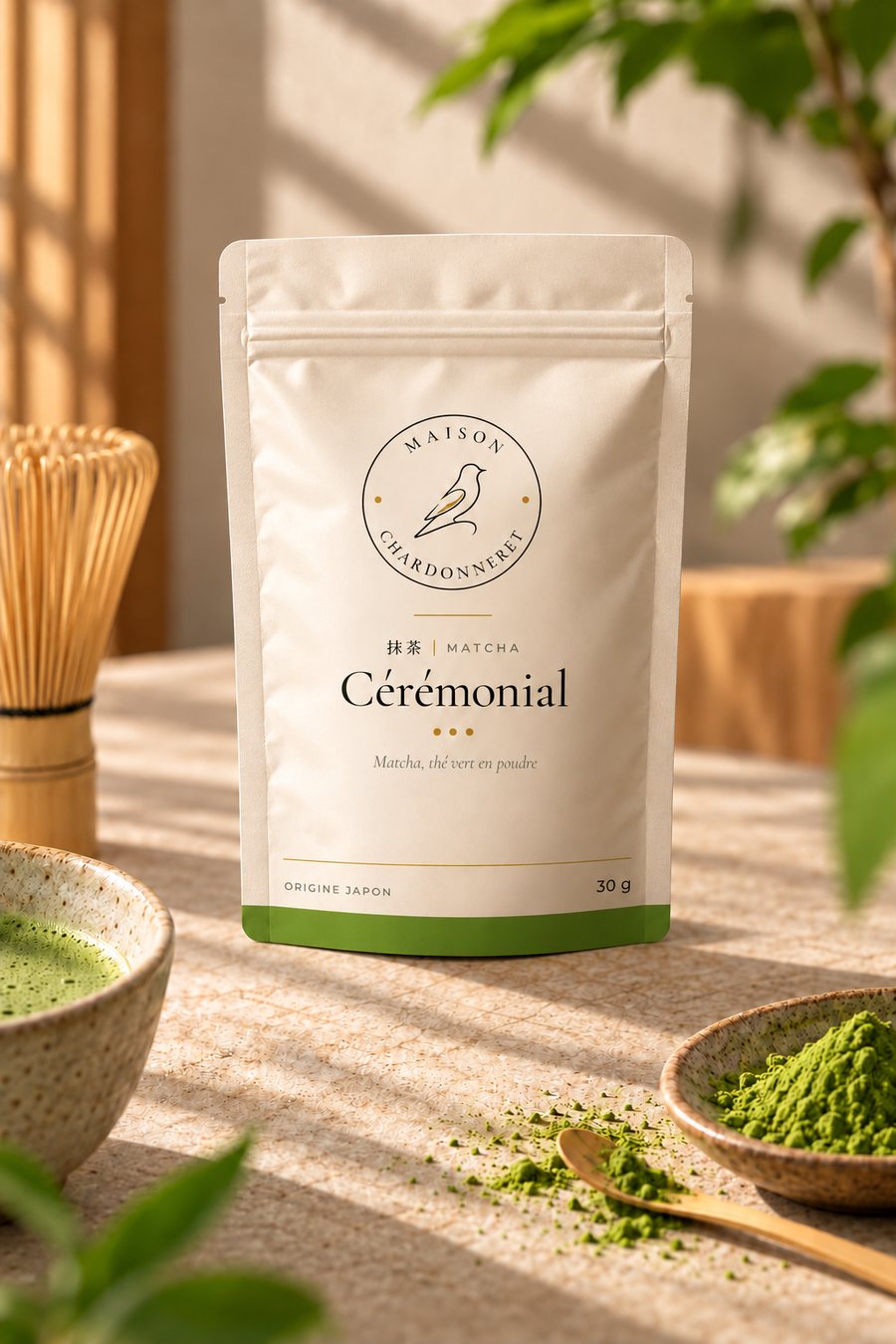
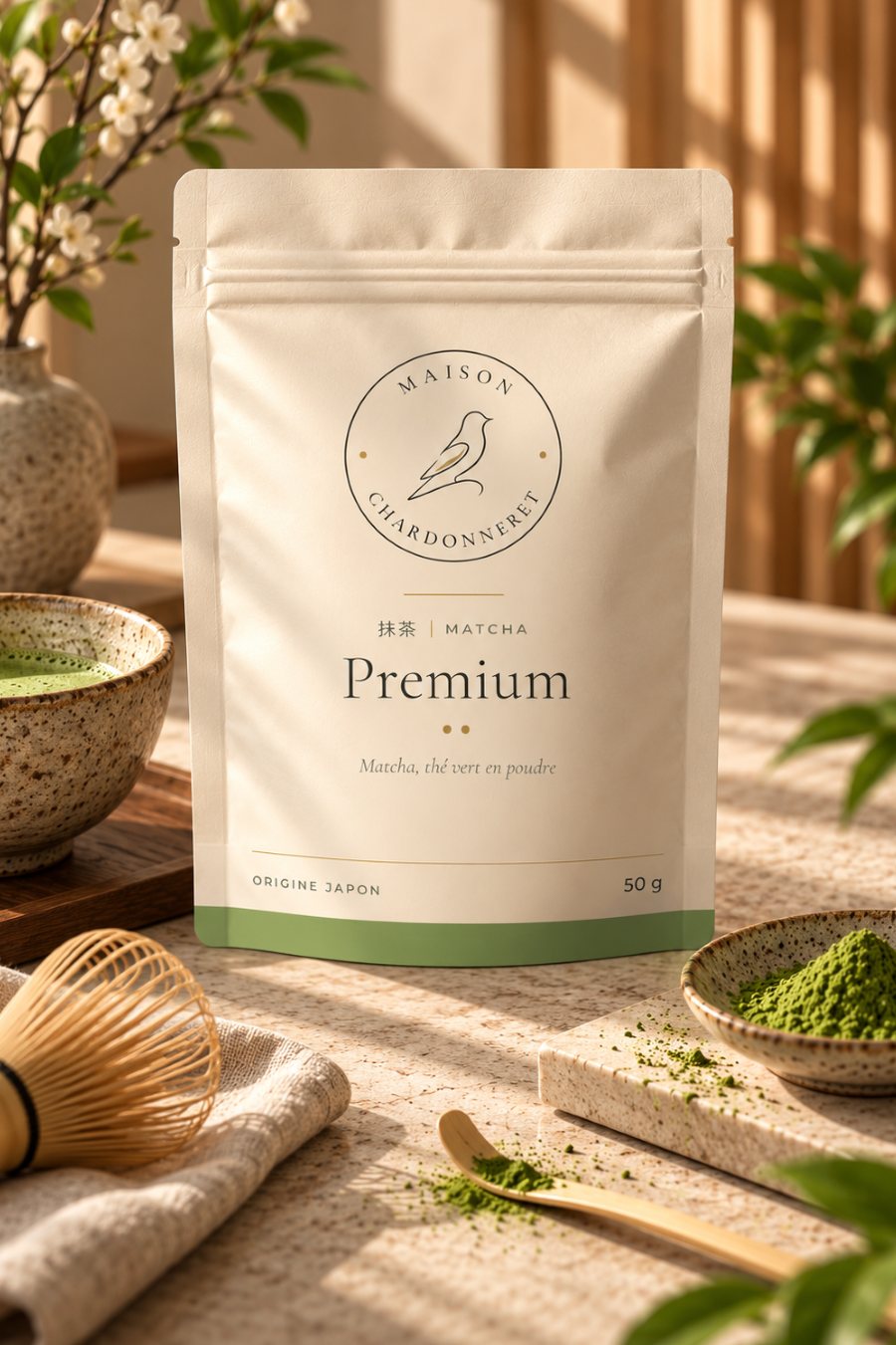
Once you have the technique, the same matcha works in other recipes: matcha latte, iced matcha… Find them in the Ritual section. And to choose a matcha for each use, read our article “Ceremonial, premium or culinary matcha?”.
Shop the ingredient
Sources
- Kyoto Prefectural Tea Research Institute (京都府茶業研究所), “抹茶のいれ方” (in Japanese), accessed 11 October 2026.
- Gion Tsujiri, “How to make matcha”, accessed 11 October 2026. Each tea school has its own gestures: this is one classic way.