
Ceremonial, premium or culinary matcha?
By Léa Chardonneret · October 2026 · 5 min read
Ceremonial, premium, culinary: three words for three uses. They help you find your way, but they do not tell the whole story. From Cannes, where we select our Japanese matcha, here is what they mean, and the criteria that really matter when choosing for each use. At Maison Chardonneret, our three grades are called Cérémonial, Premium and Essentiel (our culinary grade).
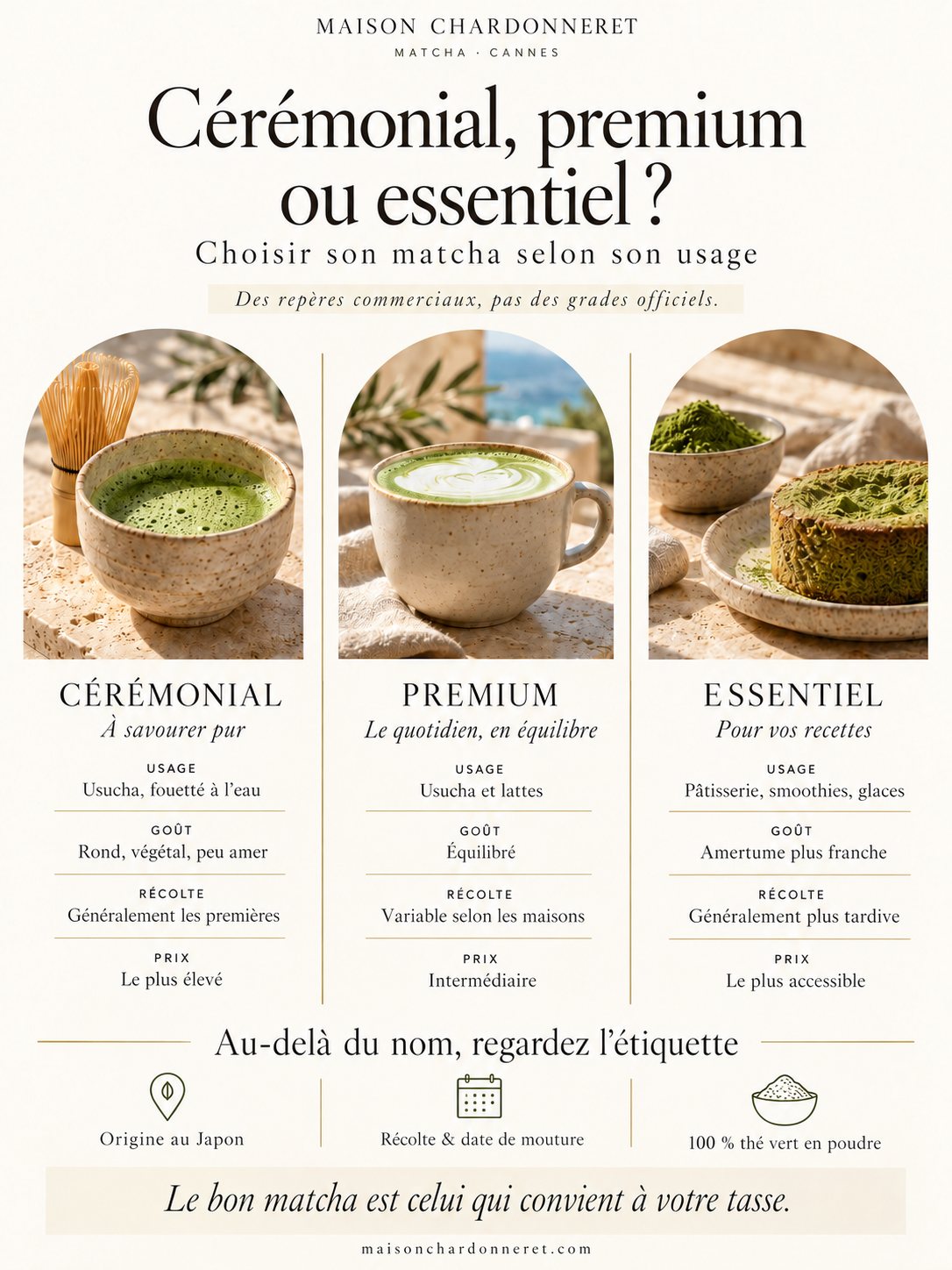
First, what is matcha?
Matcha is not just any green tea ground into powder. In Japan, the central association of the tea industry (日本茶業中央会) gives a precise definition in its voluntary green tea labelling standards, set in March 2019: it is tencha, a tea leaf grown in the shade, then dried without being rolled, and ground into a very fine powder, traditionally with a stone mill.
Guidelines, not a standard
These categories were born in Western markets. In Japan, there is no official “ceremonial”, “premium” or “culinary” grade, and no body regulates the use of these terms. Each brand therefore uses them according to its own criteria.
In everyday use, a so-called “ceremonial” matcha is meant to be drunk pure, simply whisked with water; a “culinary” matcha (our Essentiel) is meant to be mixed: lattes, smoothies, baking, ice cream. In between sits the so-called “premium” matcha.
And “premium” matcha?
It is the in-between category, and probably the most versatile. A so-called “premium” matcha, sometimes called “daily” or “latte grade”, is fine enough to drink pure, whisked, and bold enough to keep its character in a latte. It is often the choice of people who make matcha every day, in different ways.
A word of caution, though: like “ceremonial”, the word is not regulated. Some brands use it for their mid-range matcha, others for their top grade (“premium ceremonial”). Here again, the harvest, the milling date and the description of the taste tell you more than the word itself.
What really makes the difference
Rather than a label, look at what lies behind it.
- The harvest. The young leaves of the first spring harvests are most often reserved for matcha meant to be drunk pure. Later harvests give more mature leaves with a stronger taste, often used in cooking.
- Shading. It is part of the very definition of matcha; its length varies between producers and affects colour and sweetness.
- How finely it is milled. A very fine powder whisks more easily and gives a smoother foam.
- Freshness. Matcha oxidises in contact with air: a recent milling date and well-sealed packaging matter as much as the grade.
- Colour and taste. A matcha to drink pure is usually bright green with a smooth, vegetal flavour and little bitterness. A culinary matcha is often a duller green, with a bolder bitterness that comes through well in a sweet latte or a cake.
How to choose for your use
- You drink it pure, whisked: choose a matcha presented for that use, and check the harvest and milling date. This is where the difference shows the most.
- You mostly make lattes: a premium matcha is often the best compromise, and it can also be drunk pure on days when you have time for a bowl. A very delicate matcha gets a little lost in milk.
- You cook with it: a culinary matcha is enough. Its colour and strength still come through once mixed.
Questions to ask the label
Whatever name the brand has chosen, a few pieces of information help you judge:
- the region of origin in Japan (Uji, Kagoshima, Nishio…);
- the harvest;
- the milling date, or at least a packing date;
- the composition: 100% powdered green tea, with no sugar or additives;
- whether lab tests (pesticides, heavy metals) are available on request.
A brand that shares this information lets you judge for yourself, without relying on the word “ceremonial” alone.
And at Maison Chardonneret?
Our first matcha is being selected through blind tastings, from Japanese producers and tea houses. Whichever matcha we choose, each pouch will show its region of origin, its milling date and the use we chose it for. And we will only call it “ceremonial” if it truly is.
To prepare it, follow our step-by-step guide: “How to make usucha”.
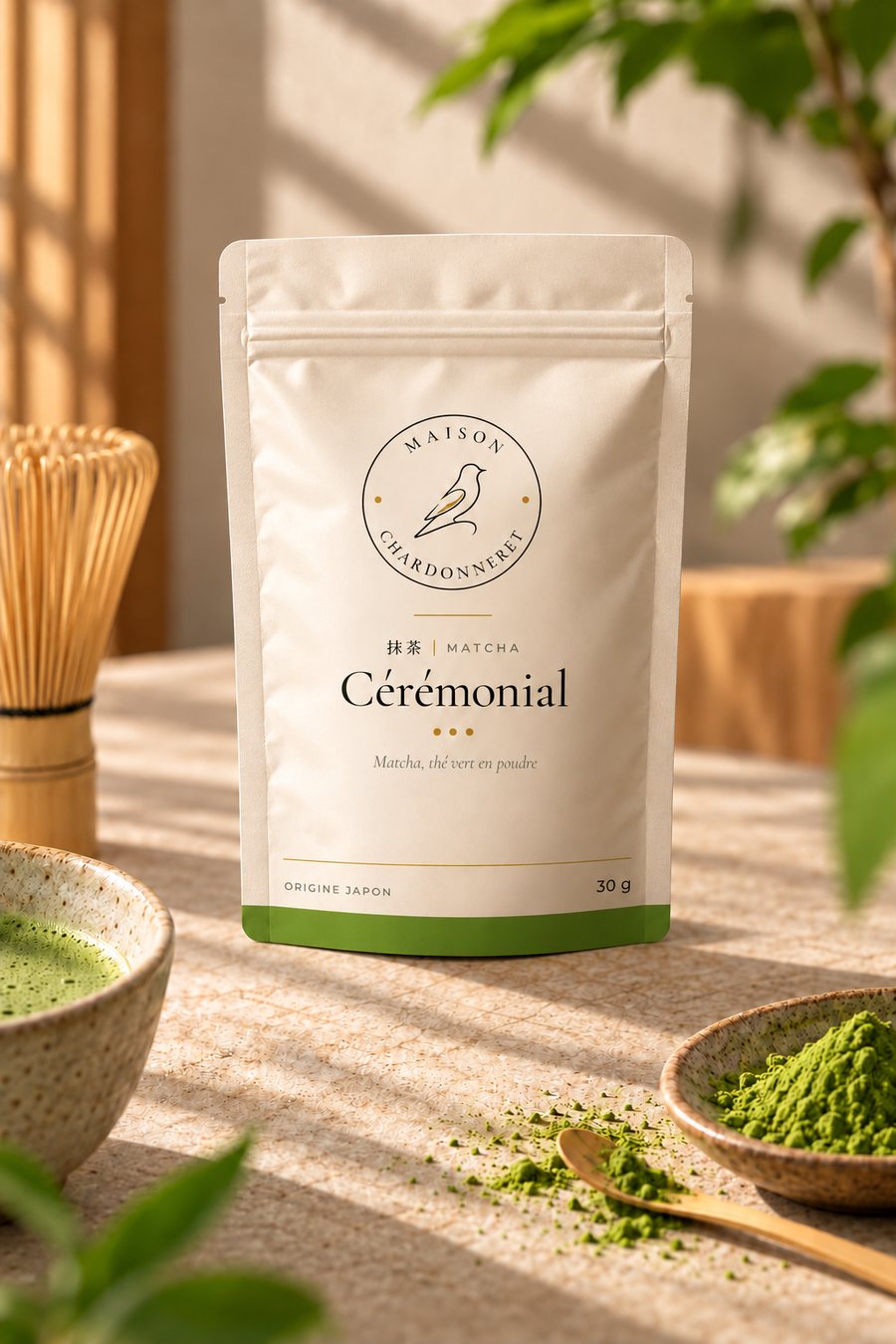
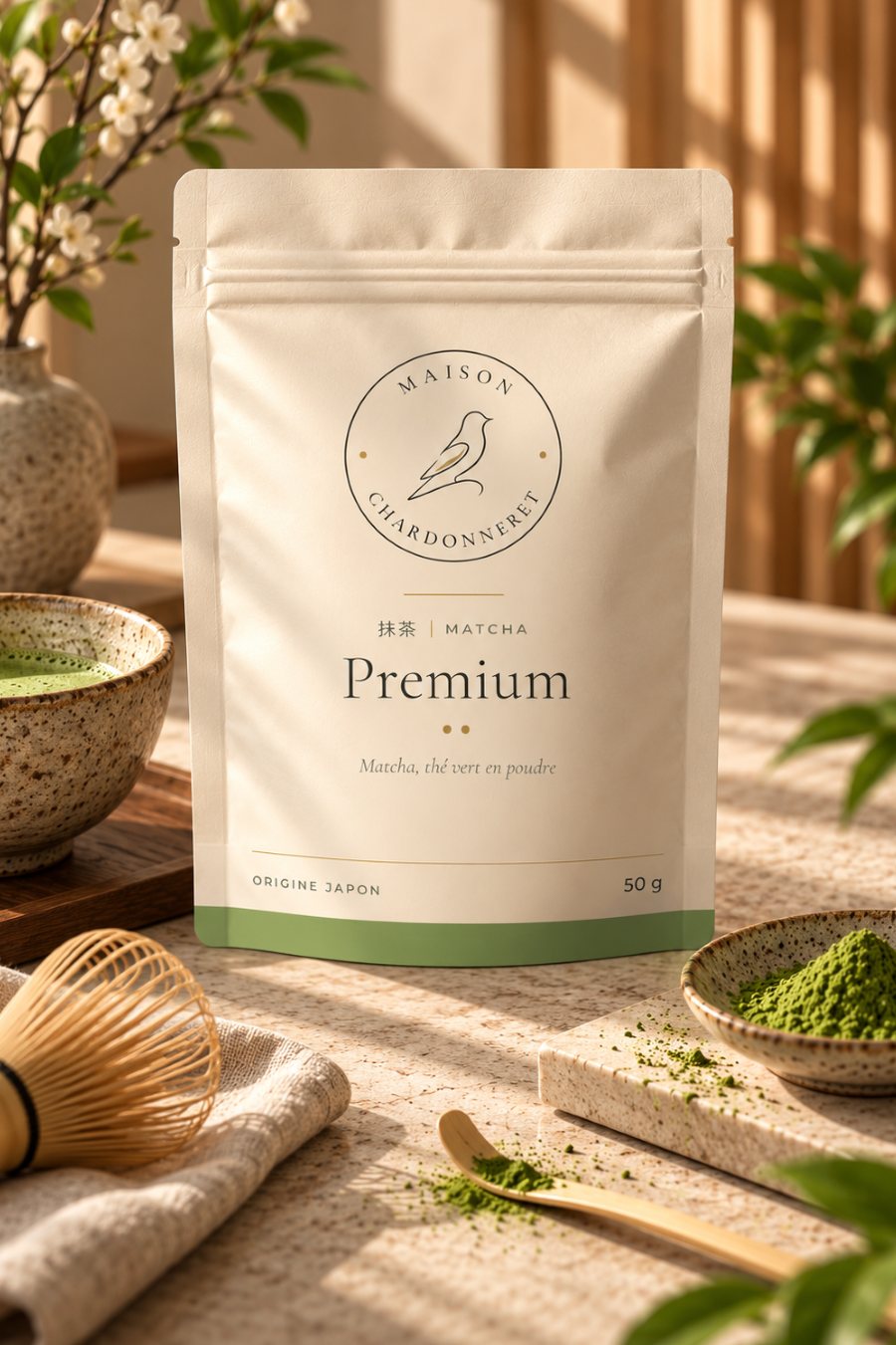
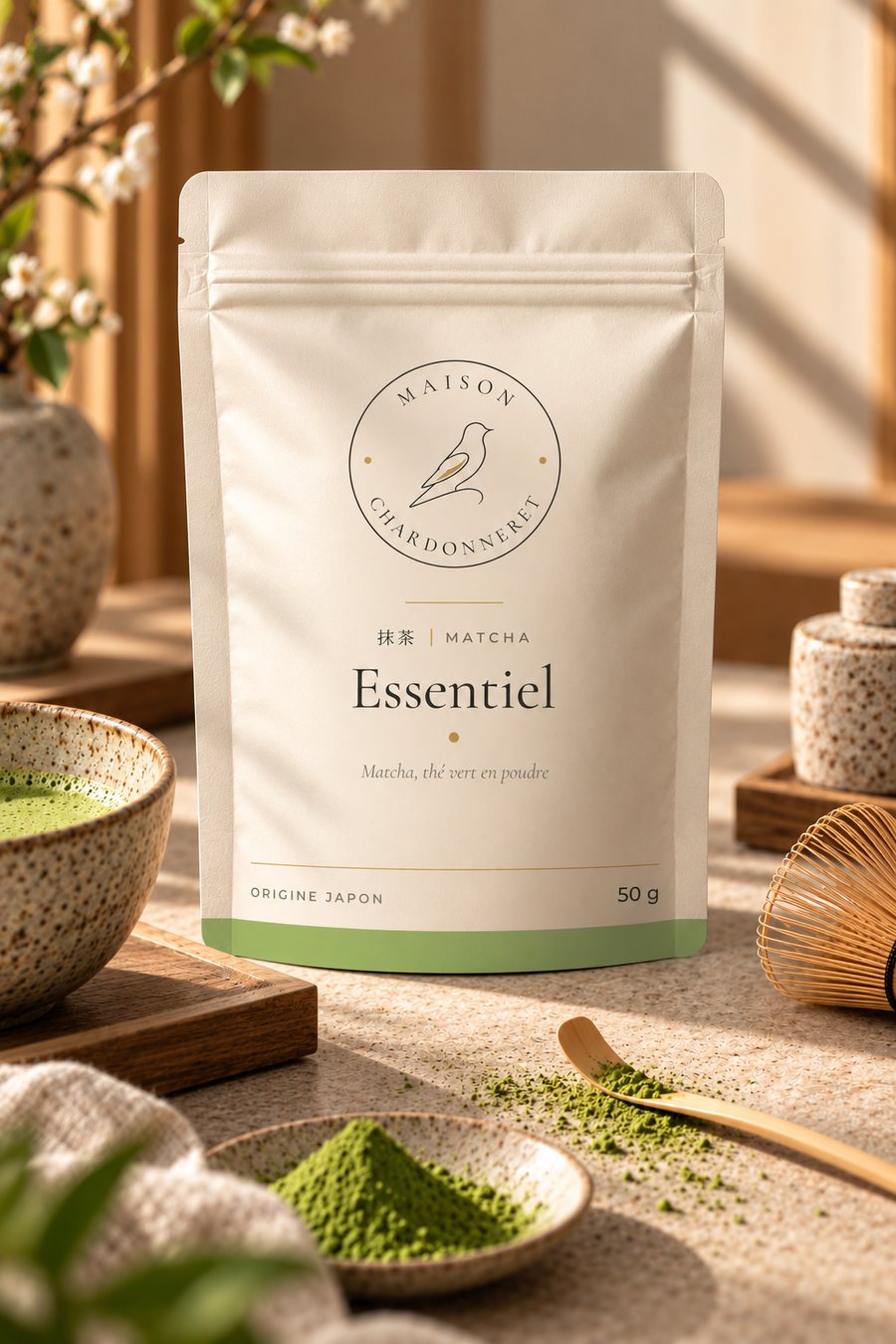
Our three matcha
Sources
- Definition of matcha by the 日本茶業中央会 (緑茶の表示基準, March 2019), quoted by Gendai Business (in Japanese), accessed 11 October 2026.
- VinePair, “Do matcha grades mean anything?”, accessed 11 October 2026.